
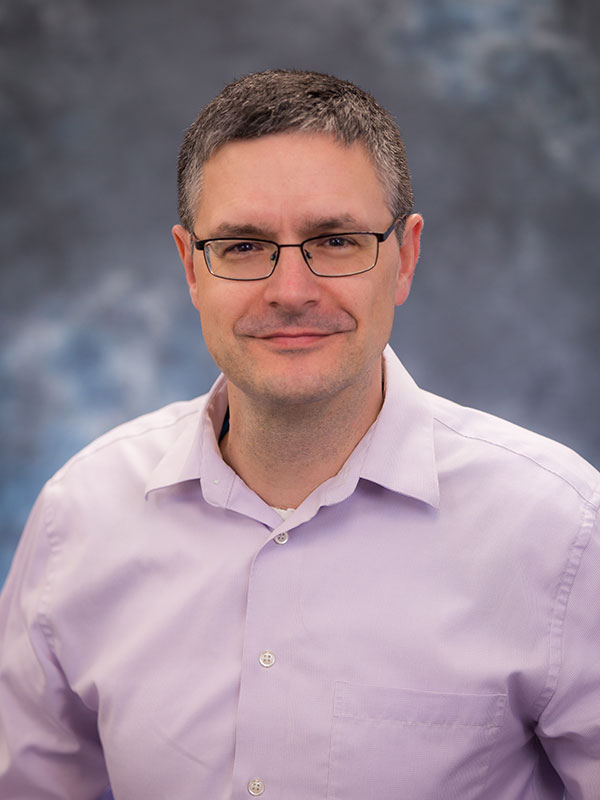
Dear alumni, students, faculty and friends,
As summer appears on the horizon, now is a good time to showcase some of the people and projects that make the University of Florida a leader in civil, coastal and environmental engineering. It has been an amazing semester.
First, we’re excited to introduce the new director of the Center for Coastal Solutions (CCS) Nina Stark, Ph.D. She’s an associate professor in Civil and Coastal Engineering and served as faculty lead for UF’s Coastal and Marine Geotechnics research group prior to her new role, which started in January.
“Dr. Stark brings unparalleled expertise in geotechnical storm and flood reconnaissance and mitigation,” said College of Engineering Interim Dean Warren Dixon.
In other leadership news, I’m pleased to share that Christopher Ferraro, Ph.D., has accepted the role of associate director of ESSIE. He’ll bring his vast experience, energy and compassion to this role, and I thank him for his service.
We also highlight ESSIE faculty work to improve coastal storm-impact predictions. A team led by Maitane Olabarrieta, Ph.D., is creating models to predict breaching, erosion, high water levels and property damage. They’re hoping the project will enable residents and emergency managers to target specific risks and make storm preparations more effective and timelier. Olabarrieta is a lead principal investigator on this multi-university project.
On the civil engineering side, we’ve got two great stories about features that might feel familiar to you, both in front of Weil Hall.
At long last, the clock tower with pride of place at the corner of Gale Lemerand Drive and Stadium Road has four complete clock faces. The addition of the Gator Chomp clock face (a UF-themed riff on the cuckoo clock) and the Log10 Clock (time-telling made logarithmic) and the refurbishment of the Binary Clock and the Wandering Dial finally makes the Weil Hall clock tower a complete expression of Gator Engineering pride, with a bit of creative nerdiness thrown in for good measure.
Also in front of Weil Hall is a teaching sculpture that went viral — on university campuses, anyway. The American Institute of Steel Construction’s (AISC) Steel Teaching Sculpture, installed in the mid-1980s, was designed to give students a new way of visualizing the complex 3-D connections involved in steel construction. It was dreamed up by the late UF Structural Engineering Professor Emeritus Duane S. Ellifritt, Ph.D., aka UF’s “Man of Steel.” The same design exists on more than 170 campuses worldwide, but it all started at UF.
Also in this issue, we feature new research that reveals how hidden flaws in design and installation contributed to the unexpected collapse of several aluminum light poles on a Central Florida bridge when Hurricane Ian moved across Florida in 2022.
And finally, we want to share work that Christopher Ferraro, Ph.D., is doing in the realm of concrete and sustainability. He’s co-PI on a project funded by the U.S. Department of Transportation that is exploring the viability of using steel slag as an ingredient in cement and concrete. The potential benefits of incorporating slag are less mining of virgin materials, reduced cost and environmental impact, as well as more durable and longer-lasting concrete.
ESSIE continues to do important, impactful work that touches people where they live. What we do matters.
I wish you well as the semester closes, and I wish you a restful and rejuvenating summer.
Kurtis Gurley
Interim Director – Engineering School of Sustainable Infrastructure & Environment