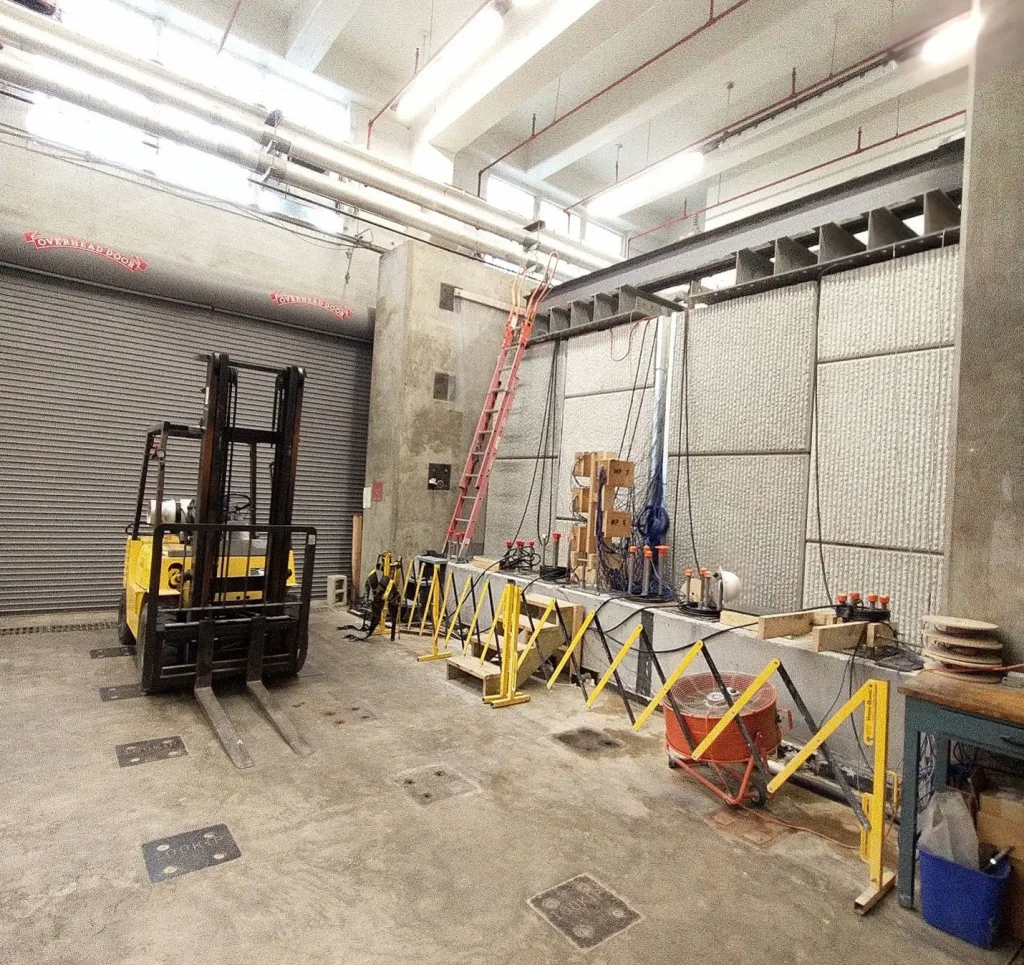
Known as “The Pit,” the Weil Hall Structures and Materials Laboratory is a fully equipped civil engineering materials preparation and structural testing facility housed in the University of Florida’s Department of Civil and Coastal Engineering. Spanning 15,000 ft² across 25 rooms, the lab specializes in concrete design and testing as well as small- to large-scale structural experiment testing, and serves as a home base for student experiential learning and research in industrialized construction.
The facility includes a high-bay structures lab, concrete mix lab, materials testing labs, universal testing machines, instrumentation lab, machine shop, wet chemistry labs, environmental chambers, classrooms, and a teaching lab. All laboratory users complete safety and research methods training before working independently in the facility. Contact Dr. Taylor Rawlinson for more information regarding laboratory onboarding.
Structures & Materials Laboratory
The Pit supports research across the full spectrum of civil engineering materials and structural testing — from small-scale material characterization and concrete property testing to large-scale structural experiments.
Concrete mixing
- AASHTO M 201 (ASTM C511) compliant concrete mixing lab
- Three concrete drum mixers (2–7 ft³ capacity)
- Planetary “high shear” concrete mixer
- Vertical shaft mixer for ultra-high performance concrete (UHPC)
- 5 qt. and 20 qt. mortar mixers
- Standard fresh property test equipment (scales, vibrating table, slump cones, air meters, thermometers, flow table, etc.)
Curing & storage
- 440 ft² moist curing room (ASTM C511)
- 144 ft² walk-in environmental chamber (-4°F to 140°F, 10–95% RH)
- 150 ft² drying shrinkage room (ASTM C157)
- 150 ft² creep room (ASTM C512)
- Three tabletop environmental chambers
- Large curing tanks and temperature-controlled coolers
- Large aggregate drying ovens, -40°F freezer, and 1,832°F muffle furnace
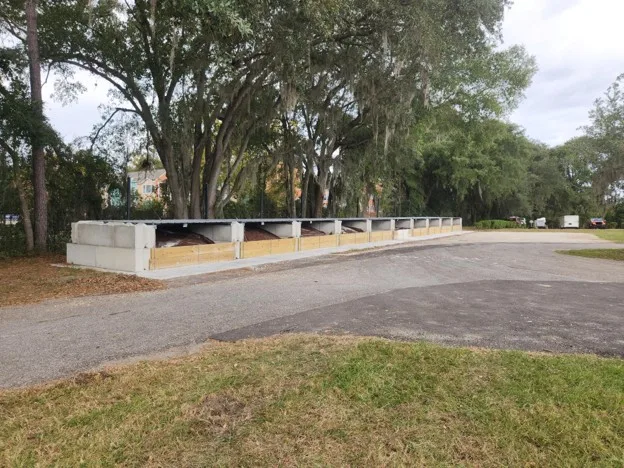
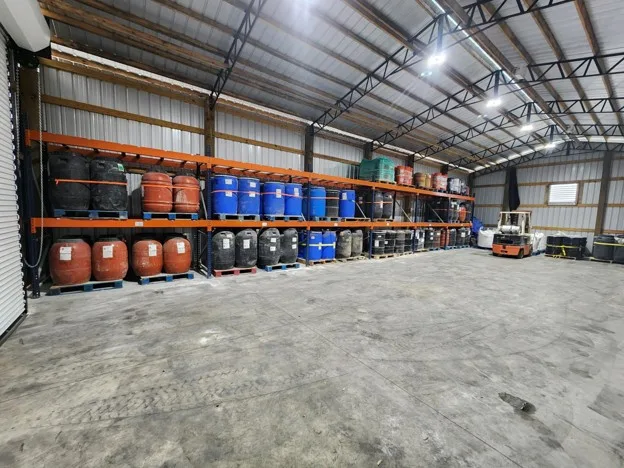
- Off-site storage with ten aggregate storage bins (10 yd³ each) and indoor storage for 180+ barrels of cementitious materials
- Skid steers for material handling
Material preparation
- Cylinder end grinder and concrete saws
- Laboratory and field coring equipment
- Material processing equipment (jaw crushers, pulverizers, ball mills, sieves, etc.)
Structural testing infrastructure
- Structural strong floor — 80′ × 20′ with 200-kip tie-downs
- Structural strong wall — Three 16′ × 16′ walls with 50-kip tie-downs
- Two 5-ton overhead cranes
- 4,500 lbs. capacity forklift
- Various hydraulic cylinders for static testing
Concrete fresh & hardened property testing
- Pheso concrete rheometer
- Thermogravimetric analyzer
- Three eight-channel isothermal calorimeters
- Semi-adiabatic calorimeters
- Freeze-thaw chamber
- Concrete bulk and surface resistivity meters
- Rapid chloride penetration testing cells
- Rapid chloride migration testing cells
- Fume hoods with chloride titration setups
- Pore press and pore solution resistivity cell
- Concrete permeability lab
- Semi-automated polishing wheel for SEM sample preparation
- Vacuum impregnation equipment
- NDT/NDE testing equipment
- National Instruments data acquisition modules
- Precision scales
Universal testing machines
- Shimadzu AGX-V 70 kip multipurpose machine — setups for ASTM C1609, C469, C109, C78, EN 14651 (CMOD), and more
- MTS 810 universal testing machine with hydraulic grips and alignment fixture for direct tension specimens
- Tinius Olsen “Super L” 400 kip machine
- Three 400-kip+ concrete compression machines
Fabrication shops
Metalworking
- Milling machines
- Lathe
- MIG, TIG, and laser welder
- Grinders, drill presses, bandsaws, and assorted power and hand tools
Woodworking
- Miter saw and table saw
- Sanders
- Handheld power tools and hand tools
Industrialized Construction Engineering
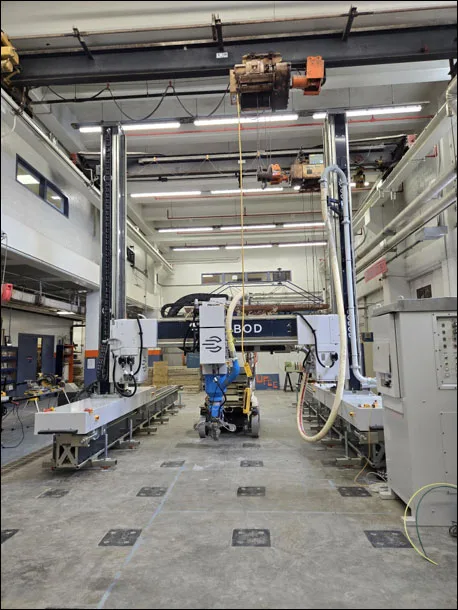
The University of Florida is home to the nation’s first Bachelor of Science degree in Industrialized Construction Engineering (ICon) — a groundbreaking program applying advanced manufacturing principles to building construction. Launched in Fall 2026 through a collaboration between the Herbert Wertheim College of Engineering and the College of Design, Construction, and Planning, a ICon encompasses digital fabrication, prefabricated modules, robotic assembly, and data-driven process optimization.
As part of this initiative, the Weil Hall Structures and Materials Laboratory houses a COBOD BOD3 concrete 3D construction printer, stationed at Weil Hall for off-site printing and mobile for use for on-site printing. The printer operates on gantry-style tracks, with a laboratory print area of 5′-10″ (X) × 19′-9″ (Y) × 10′-7″ (Z) and an on-site print area of 39′-1″ (X) × 19′-9″ (Y) × 18′-10″ (Z). The system includes a mobile batching plant with aggregate and cement silos, a concrete mixer, and a hose management system delivering concrete via piston pump at 4–6 cubic yards per hour.
Civil engineering experiential learning
The Pit is a launchpad for hands-on student development. Through project-based learning, UF civil engineering students gain direct experience with structural design, materials testing, and real-world construction challenges, bridging classroom theory with professional practice.
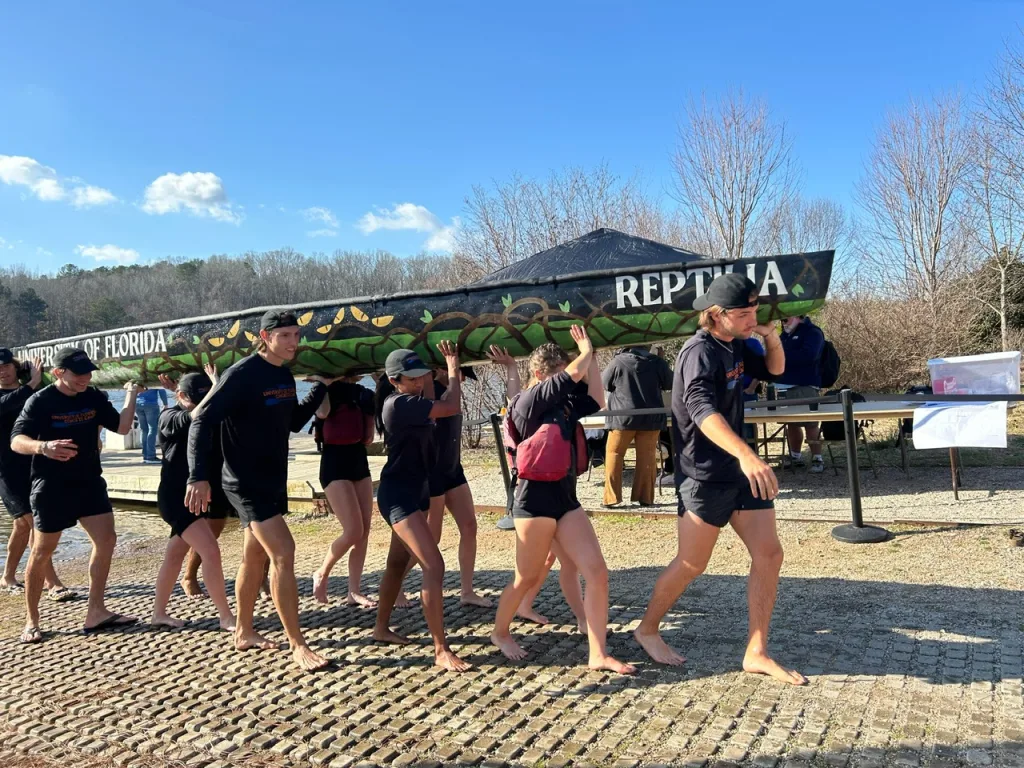
The lab is home to the 8× National Champion Eckhoff Steel Bridge Team and the 5× National Champion Concrete Canoe Team, along with many other student competition and experiential learning programs. With 13 combined national championships, UF leads every other program in the nation.